
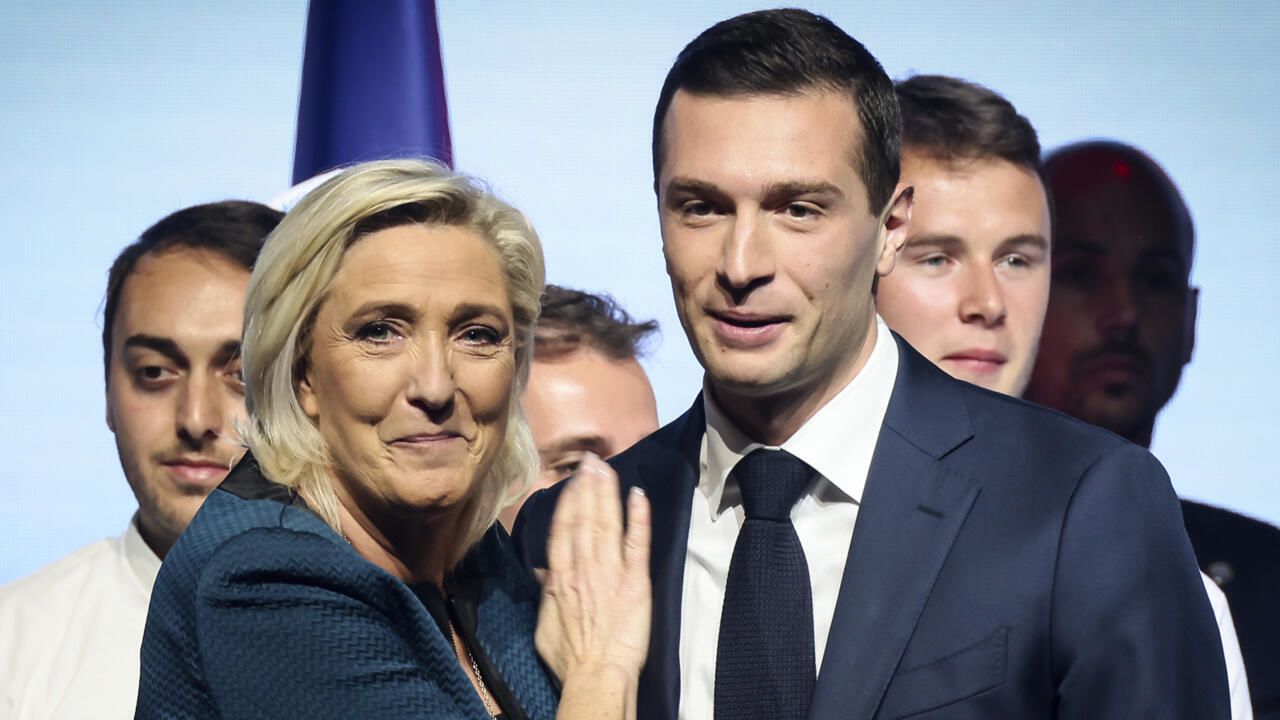
European Nationalist Leaders Rally to Support Marine Le Pen After Conviction
Marine Le Pen faces immediate political consequences following a conviction for misappropriation of public funds, drawing support from various European allies.
On March 31, 2025, Marine Le Pen, the leader of France's National Rally party, was found guilty of misappropriation of public funds related to the case of European parliamentary assistants linked to her party.
Le Pen received a sentence of five years of ineligibility to hold public office, effective immediately, along with a prison term of four years, two of which are to be served in custody.
This decision effectively halts her presidential campaign for the upcoming elections, where she had been leading in the polls.
In response to the verdict, several prominent nationalist figures from across Europe have voiced their support for Le Pen.
Hungarian Prime Minister Viktor Orban was among the first to react, expressing disbelief at the conviction.
He stated on social media, "I am Marine" and assured her of his continued support throughout the case.
Orban has encouraged Le Pen to persist in her political endeavors despite the legal challenges she faces.
Italian politician Matteo Salvini condemned the ruling as a 'declaration of war from Brussels', linking it to a broader narrative of political repression against nationalists in Europe.
In a show of solidarity, he encouraged Le Pen to remain steadfast, suggesting that her conviction reflects unfair judicial actions rather than a true reflection of electoral will.
He drew parallels between Le Pen's situation and the recent disqualification of a high-profile nationalist candidate in Romania, framing these events as coordinated efforts to undermine nationalist movements.
Meanwhile, Santiago Abascal, leader of the Spanish party Vox, affirmed his belief that the ‘voice of the French people’ would not be silenced by the judiciary.
Abascal previously invited Le Pen to share a platform with him and other right-wing leaders in Europe, suggesting that this conviction could galvanize nationalist sentiments across the continent.
In the Netherlands, Geert Wilders, head of the anti-immigration PVV, expressed shock at what he termed an 'incredibly severe' verdict.
He declared his unwavering support for Le Pen, predicting her eventual triumph in an appeal against the ruling and expressing confidence in her future candidacy for the French presidency.
Across the Atlantic, Elon Musk, the CEO of Tesla, also weighed in on the situation, criticizing the ruling as an 'abuse of the judicial system'.
He compared Le Pen’s case to the legal challenges faced by Donald Trump, suggesting that such actions are symptomatic of a broader radical left agenda to undermine political opponents globally.
In a related statement, Dmitry Peskov, a spokesperson for the Kremlin, denounced the ruling as a violation of democratic norms, claiming that European capitals are disregarding judicial integrity in politically motivated cases.
The political fallout from Le Pen’s conviction has not only raised questions about her own political future but has also sparked a wider debate on the treatment of nationalist figures in European politics.
Le Pen received a sentence of five years of ineligibility to hold public office, effective immediately, along with a prison term of four years, two of which are to be served in custody.
This decision effectively halts her presidential campaign for the upcoming elections, where she had been leading in the polls.
In response to the verdict, several prominent nationalist figures from across Europe have voiced their support for Le Pen.
Hungarian Prime Minister Viktor Orban was among the first to react, expressing disbelief at the conviction.
He stated on social media, "I am Marine" and assured her of his continued support throughout the case.
Orban has encouraged Le Pen to persist in her political endeavors despite the legal challenges she faces.
Italian politician Matteo Salvini condemned the ruling as a 'declaration of war from Brussels', linking it to a broader narrative of political repression against nationalists in Europe.
In a show of solidarity, he encouraged Le Pen to remain steadfast, suggesting that her conviction reflects unfair judicial actions rather than a true reflection of electoral will.
He drew parallels between Le Pen's situation and the recent disqualification of a high-profile nationalist candidate in Romania, framing these events as coordinated efforts to undermine nationalist movements.
Meanwhile, Santiago Abascal, leader of the Spanish party Vox, affirmed his belief that the ‘voice of the French people’ would not be silenced by the judiciary.
Abascal previously invited Le Pen to share a platform with him and other right-wing leaders in Europe, suggesting that this conviction could galvanize nationalist sentiments across the continent.
In the Netherlands, Geert Wilders, head of the anti-immigration PVV, expressed shock at what he termed an 'incredibly severe' verdict.
He declared his unwavering support for Le Pen, predicting her eventual triumph in an appeal against the ruling and expressing confidence in her future candidacy for the French presidency.
Across the Atlantic, Elon Musk, the CEO of Tesla, also weighed in on the situation, criticizing the ruling as an 'abuse of the judicial system'.
He compared Le Pen’s case to the legal challenges faced by Donald Trump, suggesting that such actions are symptomatic of a broader radical left agenda to undermine political opponents globally.
In a related statement, Dmitry Peskov, a spokesperson for the Kremlin, denounced the ruling as a violation of democratic norms, claiming that European capitals are disregarding judicial integrity in politically motivated cases.
The political fallout from Le Pen’s conviction has not only raised questions about her own political future but has also sparked a wider debate on the treatment of nationalist figures in European politics.