Emmanuel Macron Welcomes Volodymyr Zelensky for Security Summit Preparation
French President emphasizes military and financial support for Ukraine ahead of pivotal summit in Paris.
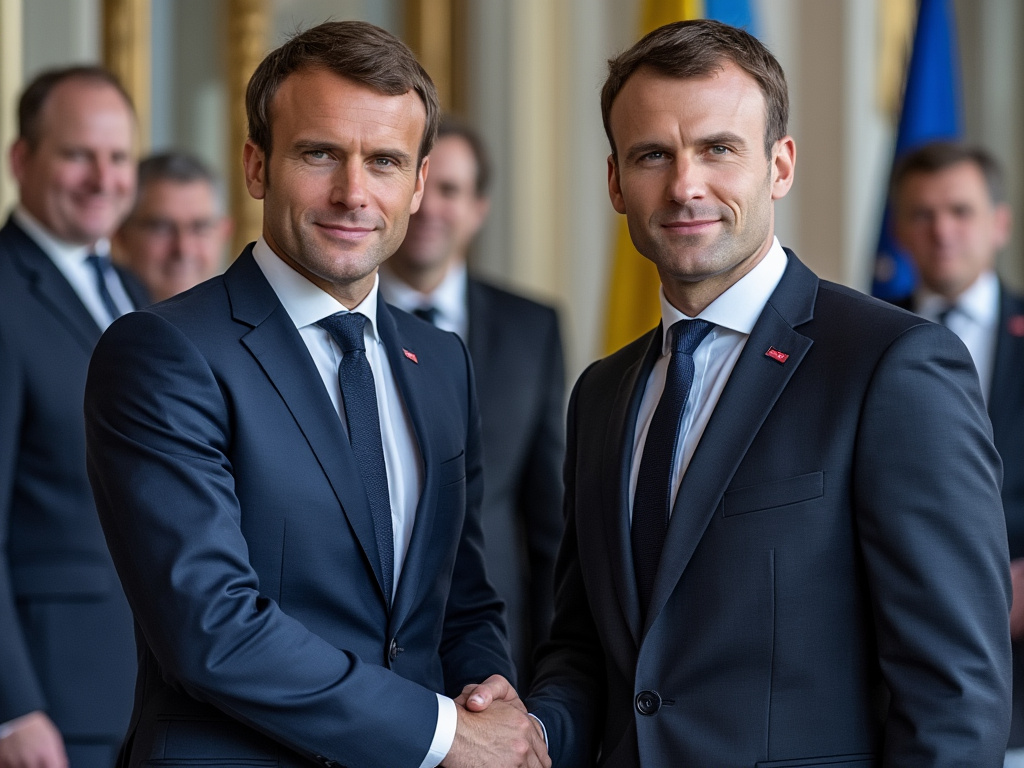
French President Emmanuel Macron is set to meet with Ukrainian President Volodymyr Zelensky on Wednesday evening at the Élysée Palace.
The meeting aims to prepare for Thursday’s summit in Paris, which will gather participants from the 'coalition of volunteers' nations willing to provide security guarantees to Ukraine.
The French presidency highlighted Macron's commitment to prioritizing the continuation and enhancement of military and financial support for Ukraine.
This summit follows a recent meeting of EU leaders in Brussels, where no agreement was reached regarding an emergency aid package of €5 billion to supply essential ammunition to Ukraine.
Macron indicated that the summit's goals involve finalizing short-term military support, developing a sustainable Ukrainian military model to deter Russian invasions, and discussing how European armed forces can provide security guarantees.
More than twenty countries from the EU and NATO are expected to attend the summit, including representatives from the United Kingdom, Canada, Norway, and Turkey.
In parallel, Macron is conducting domestic discussions to bolster France and Europe’s defense efforts amid growing concerns about U.S. disengagement in global security.
On Tuesday afternoon, he met with Prime Minister François Bayrou and several ministers to deliberate on necessary military expenditure increases and potential funding sources.
While European leaders have reiterated their support for supplying weapons and munitions to bolster Ukraine’s defense against Russian aggression, significant divergences remain regarding the funding mechanisms for these initiatives.
A proposal from European Foreign Affairs Chief Kaja Kallas to mobilize up to €40 billion for military assistance to Ukraine has garnered limited backing and lack of specific financial commitments.
Furthermore, a suggested short-term assistance package of €5 billion for Ukraine to acquire munitions has not been formally addressed.
Kallas proposed that military contributions be proportional to each country’s economic weight, using Gross National Income (GNI) as a determinant for equitable distribution.
However, this proposition has faced resistance from various EU nations, including France and Italy.
Additionally, member states are seeking clarity on how this plan aligns with an €18 billion financial package that the EU is providing to Kyiv, which is secured through extraordinary revenues from frozen Russian assets.
President Zelensky has consistently underscored Ukraine’s pressing need for military assistance to counter the Russian forces.
He emphasized the requirement for support, specifically stating, 'We need funds for artillery shells, and we would greatly appreciate Europe’s help with at least €5 billion as soon as possible,' during a prior EU summit in Brussels.
European Council President António Costa noted that EU members had previously committed an additional €15 billion to support Ukraine, with further commitments expected following the European Commission's rearmament measures.
In a separate context, the Paris summit on March 27, described as the beginning of a 'coalition of volunteers,' aims to clarify the commitment levels among European and NATO leaders regarding troop deployments in Ukraine to guarantee its security, contingent on any potential peace agreement with Russia.
President Macron proposed the establishment of 'reassurance forces' in Ukraine for stability post-peace agreement negotiations; however, Zelensky conveyed that many aspects of this proposal remain ambiguous and require further detail on operational responsibilities.
The upcoming discussions in Paris are poised to be critical, with a significant focus on ensuring adequate military backing for Ukraine as it navigates ongoing conflicts and the broader implications of potential peace agreements.
The meeting aims to prepare for Thursday’s summit in Paris, which will gather participants from the 'coalition of volunteers' nations willing to provide security guarantees to Ukraine.
The French presidency highlighted Macron's commitment to prioritizing the continuation and enhancement of military and financial support for Ukraine.
This summit follows a recent meeting of EU leaders in Brussels, where no agreement was reached regarding an emergency aid package of €5 billion to supply essential ammunition to Ukraine.
Macron indicated that the summit's goals involve finalizing short-term military support, developing a sustainable Ukrainian military model to deter Russian invasions, and discussing how European armed forces can provide security guarantees.
More than twenty countries from the EU and NATO are expected to attend the summit, including representatives from the United Kingdom, Canada, Norway, and Turkey.
In parallel, Macron is conducting domestic discussions to bolster France and Europe’s defense efforts amid growing concerns about U.S. disengagement in global security.
On Tuesday afternoon, he met with Prime Minister François Bayrou and several ministers to deliberate on necessary military expenditure increases and potential funding sources.
While European leaders have reiterated their support for supplying weapons and munitions to bolster Ukraine’s defense against Russian aggression, significant divergences remain regarding the funding mechanisms for these initiatives.
A proposal from European Foreign Affairs Chief Kaja Kallas to mobilize up to €40 billion for military assistance to Ukraine has garnered limited backing and lack of specific financial commitments.
Furthermore, a suggested short-term assistance package of €5 billion for Ukraine to acquire munitions has not been formally addressed.
Kallas proposed that military contributions be proportional to each country’s economic weight, using Gross National Income (GNI) as a determinant for equitable distribution.
However, this proposition has faced resistance from various EU nations, including France and Italy.
Additionally, member states are seeking clarity on how this plan aligns with an €18 billion financial package that the EU is providing to Kyiv, which is secured through extraordinary revenues from frozen Russian assets.
President Zelensky has consistently underscored Ukraine’s pressing need for military assistance to counter the Russian forces.
He emphasized the requirement for support, specifically stating, 'We need funds for artillery shells, and we would greatly appreciate Europe’s help with at least €5 billion as soon as possible,' during a prior EU summit in Brussels.
European Council President António Costa noted that EU members had previously committed an additional €15 billion to support Ukraine, with further commitments expected following the European Commission's rearmament measures.
In a separate context, the Paris summit on March 27, described as the beginning of a 'coalition of volunteers,' aims to clarify the commitment levels among European and NATO leaders regarding troop deployments in Ukraine to guarantee its security, contingent on any potential peace agreement with Russia.
President Macron proposed the establishment of 'reassurance forces' in Ukraine for stability post-peace agreement negotiations; however, Zelensky conveyed that many aspects of this proposal remain ambiguous and require further detail on operational responsibilities.
The upcoming discussions in Paris are poised to be critical, with a significant focus on ensuring adequate military backing for Ukraine as it navigates ongoing conflicts and the broader implications of potential peace agreements.