
Conclave Begins as Cardinals Gather to Elect New Pope
133 Cardinals from 70 Countries Enter the Sistine Chapel for a Secluded Election Process Following the Death of Pope Francis
The conclave to elect the next pope officially commenced on Wednesday afternoon at the Vatican, with the doors of the Sistine Chapel closing behind 133 cardinal electors from 70 countries, marking a historic participation level.
This event follows the passing of Jorge Bergoglio, also known as Pope Francis, and is being closely monitored by approximately 1.4 billion Catholics and thousands of journalists worldwide.
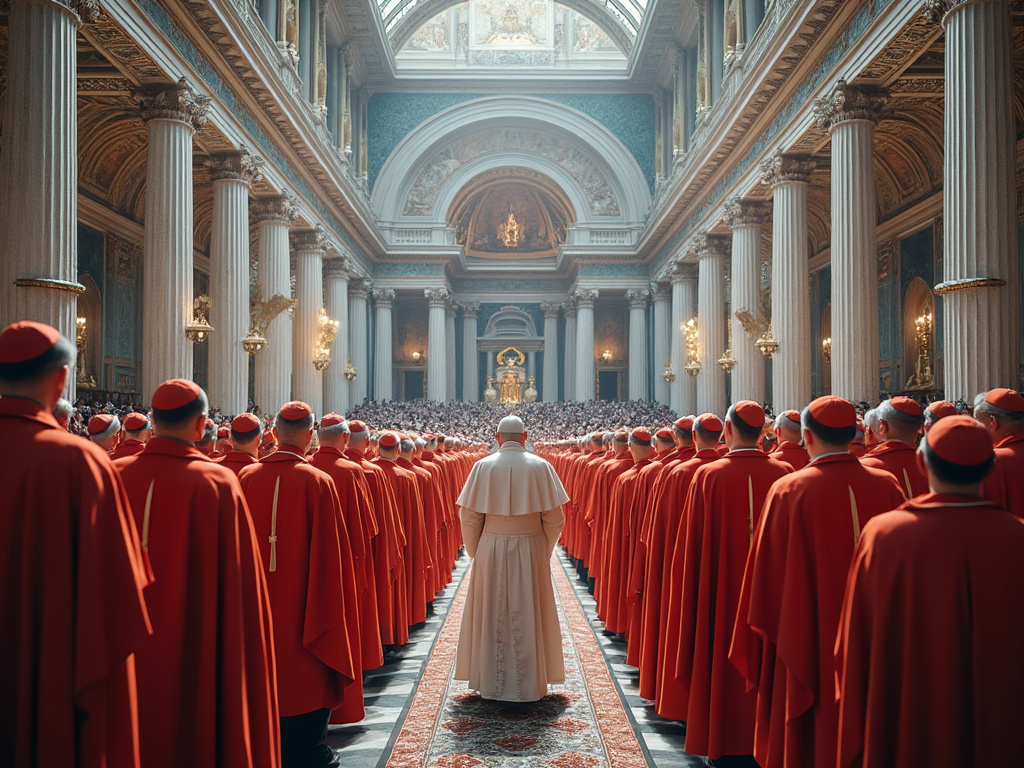
The day's proceedings began with a mass in St. Peter's Basilica, attended by the cardinals adorned in red and white.
Shortly after 4:00 PM local time (14:00 GMT), they gathered for a communal prayer in the Pauline Chapel before processing solemnly into the Sistine Chapel.
In a ceremonial commitment spoken in Latin, the cardinals placed their hands on a page of the Gospel and vowed: "I promise, I oblige, and I swear" to maintain the secrecy of the conclave, the violation of which holds the penalty of excommunication.
The Chief of Liturgical Celebrations, Archbishop Diego Ravelli, then declared "Extra omnes!" ("everyone out!") to expel those not authorized to be part of the secluded assembly.
As a result, all mobile phones are prohibited, and telecommunications within the Vatican's walls are cut off.
A crowd of faithful outside St. Peter's Basilica responded to the announcement with applause as they gathered around large screens displaying the ceremony.
At approximately 5:45 PM (15:45 GMT), the conclave's doors closed, sealing the cardinals—referred to as the "princes of the Church"—in their decision-making space, dominated by Michelangelo's famous "Last Judgment" fresco.
The first voting session is expected to take place soon after, though results may not be announced until 7:00 PM (17:00 GMT).
This initial vote serves as an assessment of standings among the cardinals, and it is unlikely that the necessary two-thirds majority—89 votes—will be reached at this stage.
Further voting is scheduled for Thursday, including two rounds in the morning and two additional in the afternoon.
The world will look to the slender chimney atop the Sistine Chapel, which will emit smoke at the conclusion of each voting session: black smoke indicating no election and white smoke confirming the election of a new pope.
With around 5,000 journalists present to cover the conclave, public interest extends well beyond religious circles, as evidenced by significant betting on the identity of the new pope, thriving online games, and the success of the 2024 film "Conclave."
Enhanced security measures have been implemented around St. Peter's Square, limiting access points and conducting bag checks by police officers.
Gabriella Sanz Balsells, a 48-year-old Argentine in attendance, expressed her anticipation, stating, "We knew the conclave was starting today and came...
It would be wonderful to see the smoke, even if it is not white!"
As the conclave unfolds, speculation grows regarding the potential candidates among the 133 cardinals.
These include Italian cardinals Pietro Parolin and Pierbattista Pizzaballa, Maltese Mario Grech, French Archbishop Jean-Marc Aveline, and Filipino Luis Antonio Tagle, among others, who are seen as leading contenders.
The conclave marks an unprecedented representation of nominees from the "peripheries" favored by Pope Francis, who appointed 81% of the cardinal electors.
Observers note possible cultural and political tensions between some Southern churches and Western establishments, which may influence cardinals' voting decisions.
An underlying geopolitical context could also shape the election, with rising populism, increasing tensions in the Israel-Hamas conflict, and deteriorating relations between India and Pakistan presenting significant issues for the next papal leadership.
François Mabille of the Geopolitical Observatory of Religion remarked on the possibility that cardinals attuned to current international circumstances might seek an experienced leader to navigate these complexities, particularly in understanding global relations.
This event follows the passing of Jorge Bergoglio, also known as Pope Francis, and is being closely monitored by approximately 1.4 billion Catholics and thousands of journalists worldwide.
The day's proceedings began with a mass in St. Peter's Basilica, attended by the cardinals adorned in red and white.
Shortly after 4:00 PM local time (14:00 GMT), they gathered for a communal prayer in the Pauline Chapel before processing solemnly into the Sistine Chapel.
In a ceremonial commitment spoken in Latin, the cardinals placed their hands on a page of the Gospel and vowed: "I promise, I oblige, and I swear" to maintain the secrecy of the conclave, the violation of which holds the penalty of excommunication.
The Chief of Liturgical Celebrations, Archbishop Diego Ravelli, then declared "Extra omnes!" ("everyone out!") to expel those not authorized to be part of the secluded assembly.
As a result, all mobile phones are prohibited, and telecommunications within the Vatican's walls are cut off.
A crowd of faithful outside St. Peter's Basilica responded to the announcement with applause as they gathered around large screens displaying the ceremony.
At approximately 5:45 PM (15:45 GMT), the conclave's doors closed, sealing the cardinals—referred to as the "princes of the Church"—in their decision-making space, dominated by Michelangelo's famous "Last Judgment" fresco.
The first voting session is expected to take place soon after, though results may not be announced until 7:00 PM (17:00 GMT).
This initial vote serves as an assessment of standings among the cardinals, and it is unlikely that the necessary two-thirds majority—89 votes—will be reached at this stage.
Further voting is scheduled for Thursday, including two rounds in the morning and two additional in the afternoon.
The world will look to the slender chimney atop the Sistine Chapel, which will emit smoke at the conclusion of each voting session: black smoke indicating no election and white smoke confirming the election of a new pope.
With around 5,000 journalists present to cover the conclave, public interest extends well beyond religious circles, as evidenced by significant betting on the identity of the new pope, thriving online games, and the success of the 2024 film "Conclave."
Enhanced security measures have been implemented around St. Peter's Square, limiting access points and conducting bag checks by police officers.
Gabriella Sanz Balsells, a 48-year-old Argentine in attendance, expressed her anticipation, stating, "We knew the conclave was starting today and came...
It would be wonderful to see the smoke, even if it is not white!"
As the conclave unfolds, speculation grows regarding the potential candidates among the 133 cardinals.
These include Italian cardinals Pietro Parolin and Pierbattista Pizzaballa, Maltese Mario Grech, French Archbishop Jean-Marc Aveline, and Filipino Luis Antonio Tagle, among others, who are seen as leading contenders.
The conclave marks an unprecedented representation of nominees from the "peripheries" favored by Pope Francis, who appointed 81% of the cardinal electors.
Observers note possible cultural and political tensions between some Southern churches and Western establishments, which may influence cardinals' voting decisions.
An underlying geopolitical context could also shape the election, with rising populism, increasing tensions in the Israel-Hamas conflict, and deteriorating relations between India and Pakistan presenting significant issues for the next papal leadership.
François Mabille of the Geopolitical Observatory of Religion remarked on the possibility that cardinals attuned to current international circumstances might seek an experienced leader to navigate these complexities, particularly in understanding global relations.