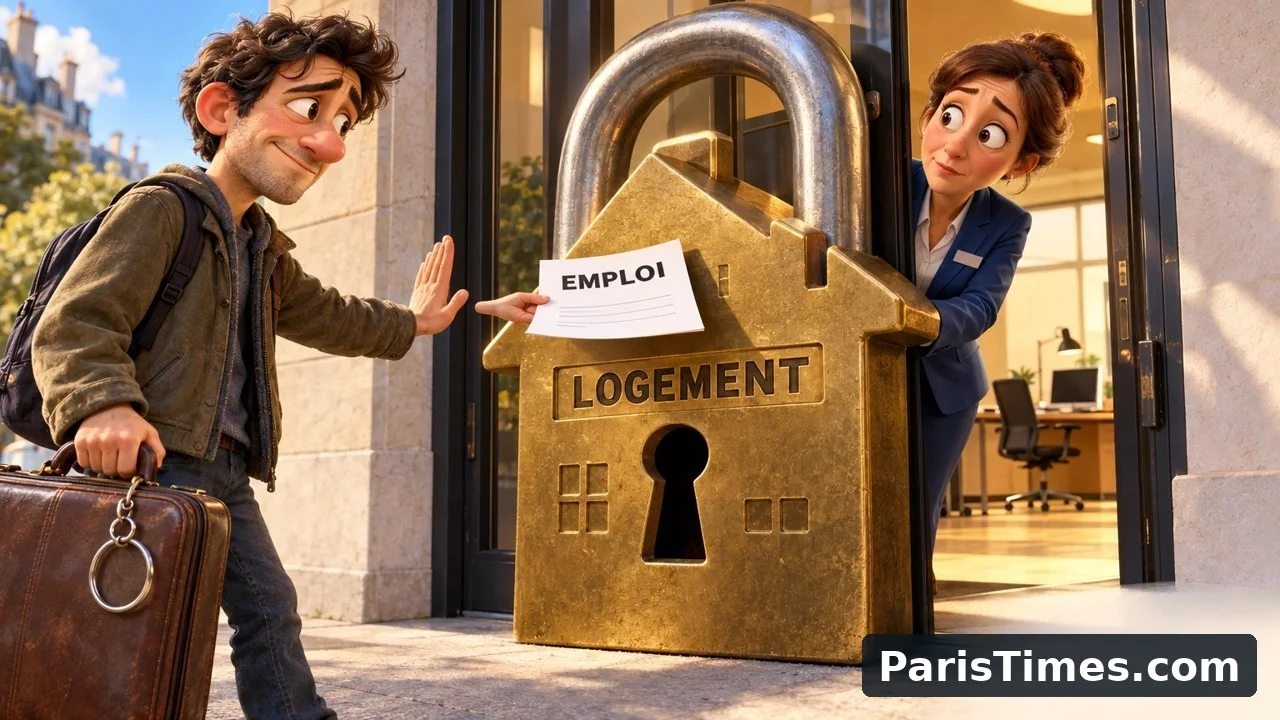
Some rental applicants in France are submitting fake employment contracts to secure a home as a housing shortage leaves even well-paid professionals struggling to find somewhere to live. “My husband made a fake employment contract,” one person seeking a rental says. The difficulty of finding housing now cuts across social groups, affecting students, young professionals, low-income households and executives alike.
Gaspard, a 27-year-old consultant, wanted to share a home in Paris with two friends. They were “very flexible about the location.” Each earns an annual gross salary of between €60,000 and €65,000, and each has guarantors with comfortable incomes. Yet those strong financial credentials have not spared them a difficult search.
“If we can’t manage it with incomes like these, I really wonder who can find a home,” Gaspard says. His experience illustrates how the crisis has spread to applicants with substantial financial backing. Nothing links him to the fraudulent practices described by others.
The fundamental constraint is the shortage of available homes. According to an October 2026 report by the Cour des comptes, France’s public audit institution, the housing stock has grown by an average of just 0.9% annually since 2018. New home construction has fallen to its lowest level since the 1940s, with the shortfall estimated at 500,000 homes a year.
In this strained market, rents continue to rise sharply across the country. Applicants face two hurdles: finding an available property and then being able to afford it. A financially reassuring application cannot create the missing home. Neither can a falsified one.