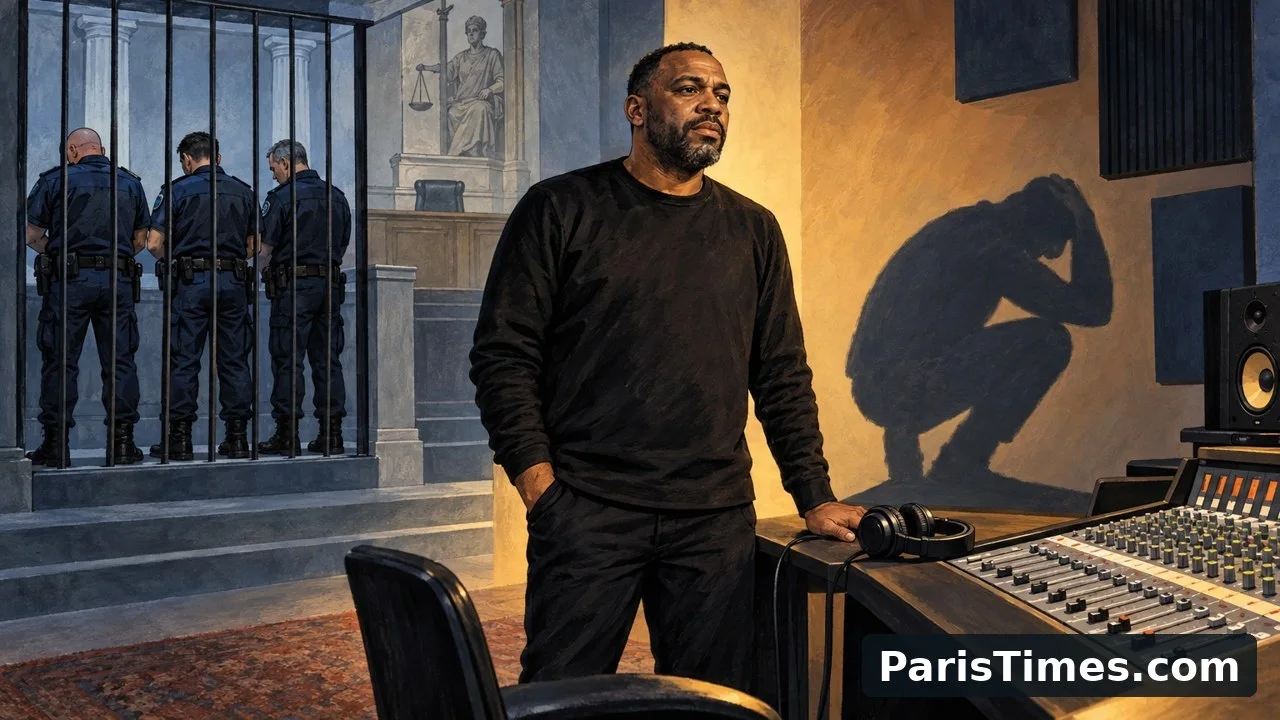
Three police officers who beat Black music producer Michel Zecler on November 21, 2020, have been sentenced to between one and two years in prison. After a two-week trial, the court recognized the assault as racist and also convicted the officers of falsifying an official record: they had written a false police report accusing their victim.
Aurélien Lapersonne received a five-year sentence, with two years to serve; Philippe Tondeux received five years, with a year and a half to serve; and Pierre Plantier received five years, with one year to serve. All three were permanently banned from working as police officers, with the ban taking immediate effect.
The officers had faced charges of aggravated intentional violence, including racial aggravation, falsifying an official record as public officials, and unlawful entry. They faced a maximum sentence of 15 years. On Thursday, prosecutors had requested prison terms of up to six years to serve.
Whether the court would recognize racism was a central issue in the verdict. The racial aggravating circumstance had been excluded during the investigation but was reintroduced for the court’s deliberations, after featuring prominently throughout the trial.
On November 21, 2020, the three officers had sought to check Zecler for not wearing a face mask during France’s second COVID-19 lockdown. They beat him in the entrance to his music studio. Zecler says one officer called him a racist anti-Black slur.
Thirty additional police officers were called in. After a tear gas grenade was thrown into the studio, nine young people inside were violently detained along with Zecler. The producer was beaten again in the street.
The three officers then drew up a false report accusing Zecler of assaulting them and filed a complaint against him for resisting police. But the studio’s surveillance footage showed the officers raining blows on Zecler without him striking back. It completely contradicted their account and, in the words of the advocate general, saved the producer from a “miscarriage of justice.”
During the trial, all three defendants acknowledged using “illegitimate” violence. After offering Zecler no words of acknowledgment during the opening days, they eventually apologized to him.
The officers had no prior records, had received favorable assessments from their superiors and were described by a psychiatric expert as having “normal intelligence.” They struggled to explain the outburst of violence, invoking the fear, or even “panic,” they said they had felt.
Lapersonne, who was 23 at the time and wrote the false report, acknowledged difficulty managing frustration. He said he had put his “perception” into writing. Tondeux, a ranking officer and the oldest of the three, was sometimes in tears on the stand. He called the intervention “catastrophic” and admitted that the report was “false from A to Z.” Plantier, the least outspoken, “followed along.”
The judgment punishes both racist violence and its extension into an official account that cast the victim as the aggressor.