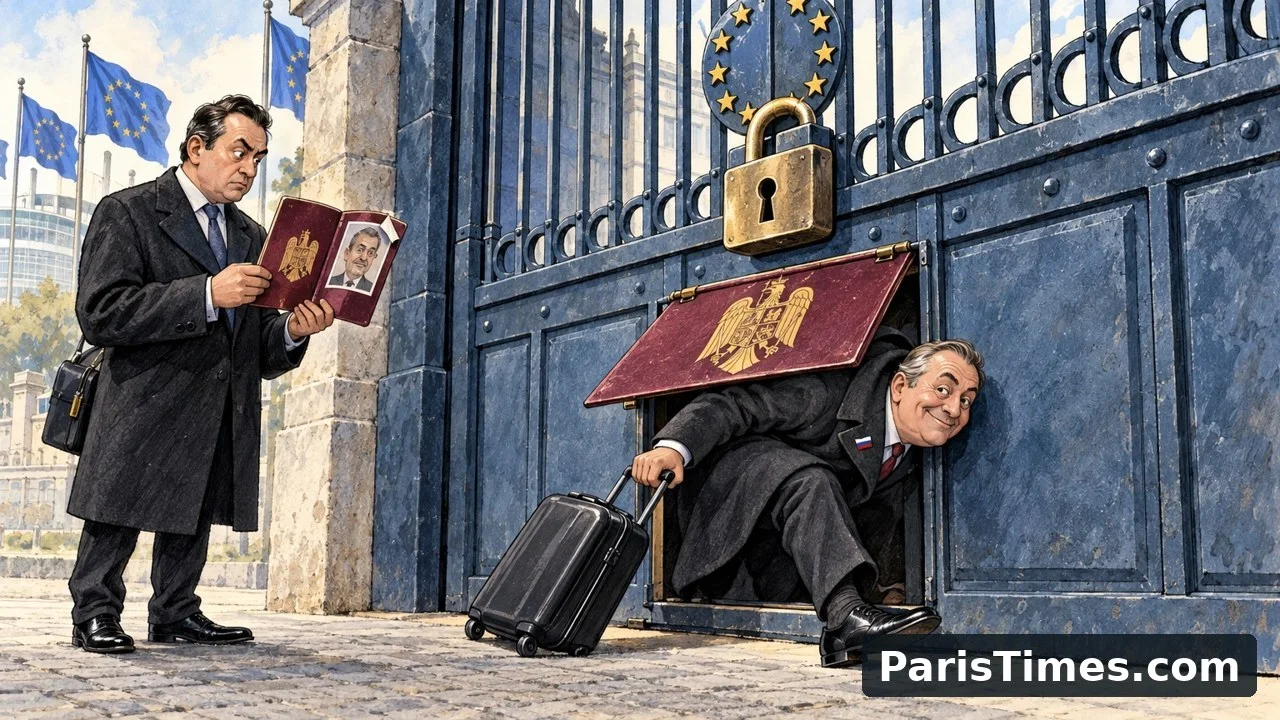
French mayors, including several in Franche-Comté, say they would refuse to implement certain Rassemblement National policies, including national preference in access to housing or public services, if the party wins the 2027 presidential election. With less than six months until the vote, they cast themselves as protectors of their communities while insisting they intend to remain within the law. The limits of that position could ultimately be tested in administrative court.
In Bavilliers, in the Territoire de Belfort department, left-leaning independent Mayor Léo Prassel wants to provide an “umbrella” for residents. Among his concerns are the threats that some measures proposed by the far-right party could pose to community organizations.
“This is not about breaking the law; that is not my role as mayor,” he says. His aim would be to “act as a buffer against national policies,” something he says local government already does. Yet he also makes clear that he does not want to implement certain RN proposals, notably national preference in housing allocations or access to some public services.
Prassel believes municipal responsibilities give him room to act: allocating social housing, providing premises for community organizations and managing surveillance cameras. “I think we still have that power,” he says. The difficulty lies in the distinction between exercising local discretion and having the authority to disregard a legal obligation.
Other mayors are taking a similar position. In Trélazé, in Maine-et-Loire, Lamine Naham, also a left-leaning independent, says he is already preparing a “resistance” budget against what he considers the “disaster scenario” of an RN government. In Échirolles, in Isère, Mayor Amandine Demore is calling on municipal leaders to “enter into resistance.”
In Audincourt, in Doubs, Martial Bourquin grounds his opposition in civil liberties and the rule of law. “They are attacking freedoms and the rule of law. If that is called resistance, that suits me,” he says of the RN. He, too, says he does not want to implement measures that would violate the Constitution.
But refusing to carry out a law can expose a municipality to litigation. Alain Chrétien, the mayor of Vesoul, a vice president of the Association of French Mayors and president of its Haute-Saône branch, notes that the prefect, the central government’s local representative, can challenge a municipal decision in administrative court. He urges mayors to use the legal remedies available to them rather than disregard the law.
“Whoever wins, I will display their portrait at town hall,” he says, adding that elected officials must obey the law.
The RN, meanwhile, sees these declarations as an advance challenge to the election result. Guillaume Bigot, the party’s member of Parliament for the Territoire de Belfort, expresses surprise that elected officials would announce, in his view, that they will not respect an election. He considers the Republic’s foundations sufficiently sound and describes the Constitutional Council as “the guardian of the law.”
Bigot says questions can be raised about national preference, but accuses the mayors of rejecting debate in favor of a “reductio ad hitlerum”—a comparison with Hitler that, he argues, serves to disqualify his party from the outset.
The dispute is therefore also about the meaning of a municipal mandate: the mayors invoke protection of residents and constitutional principles; the RN counters with respect for the electoral choice. If the state challenges a local decision, however, the confrontation could move from political declarations to an administrative judge.